Summer Fellowship Highlight - Ecology & Evolution
We checked in with Dr. Wootton to share some highlights from some of our students on the BSCD Ecology & Evolution Summer Fellowship this summer. Check out some photos of their experiences so far!:
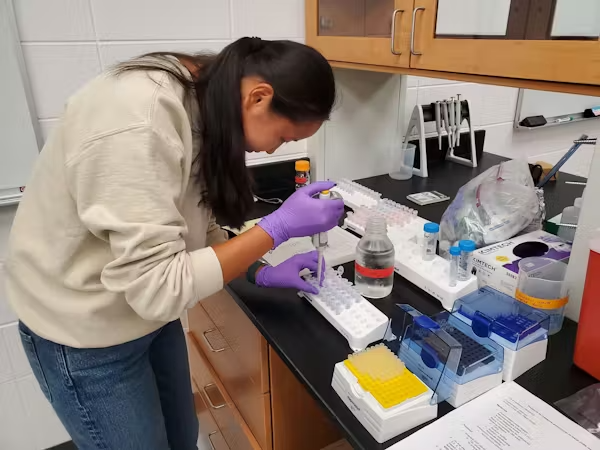
Jenna Moor ('26) preparing samples for nutrient analysis.
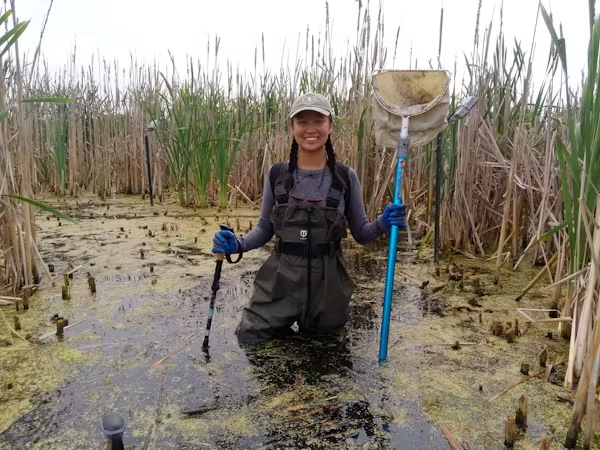
Moor out in the marshes in the Calumet region, Southwest of Chicago.
Jenna Moor ('26) spent the first half of the summer doing field research in the Calumet region's marshes. In addition to her mentors Leo Gaskins and Linta Reji, Jenna has also been working with the Chicago Park Distrcit and members of Audubon Great Lakes for field work and sample collection.
We reached out to Jenna to hear about what her research is investigating:
"I’m studying the effects of muskrat lodges on invertebrate communities and nutrient availability in a freshwater marsh ecosystem on the southeast side of Chicago. Muskrats are ecosystem engineers that modify their environments by building lodges, impacting the landscape and other species around them. I’m curious about whether invertebrate communities and nutrient levels are different at muskrat lodges compared to control sites in the marsh."
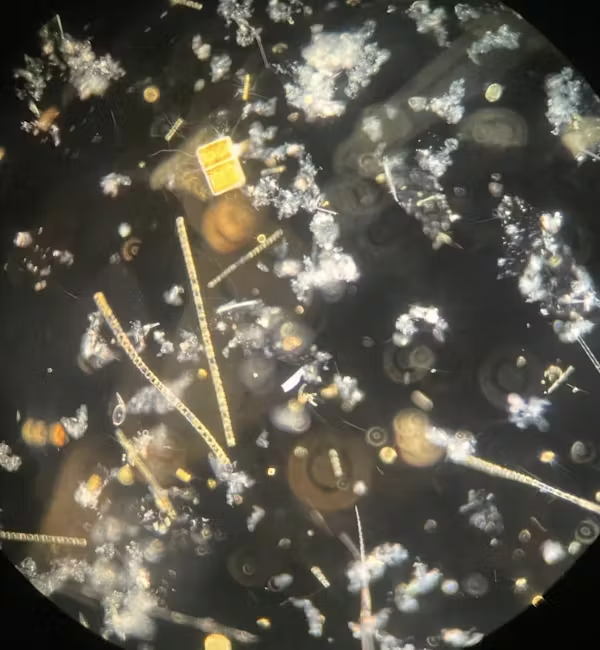
Microscope image of a diatom community.
Jenna is back in the lab at the moment, excited to move to processing the collected samples and proceeding on to data analysis.
Another student we got a chance to touch base with is Hanim Nuru ('26). She's been working off the coast of Olympic National Park in Washington State on Tatoosh Island (see below for an elephant seal she met!).
I caught up with Hanim over email about what she's been up to so far this summer:
"I am investigating how diatom communities respond to ocean acidification, as diatoms are essential primary producers and key players in biogeochemical cycling through their silicate-based cell walls. Diatom communities were collected from Tatoosh Island (where I saw the elephant seal!) and brought back to the lab for species isolation and culturing. I plan to homogenize individual species to create a synthetic community, which will be used in mesocosm experiments simulating ocean acidification (OA) conditions. Chemical analyses will test the hypothesis that elevated biogenic carbon levels under OA reduce the dissolution of silicate cell walls, thereby enhancing diatom viability and population growth."
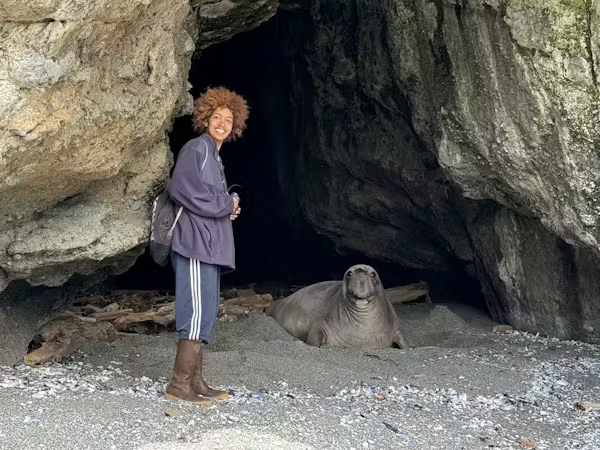
Hanim Nuru ('26) with an elephant seal on Tatoosh Island, Washington.
We hope this sneak peek into what our Ecology & Evolution Summer Fellows have been working on this summer serves as some inspiration for your own research aspirations! Make sure to stay up to date with BSCD communications so you know when to submit your fellowship application this next Winter.